From Clover to the Courtroom: SC's First Trafficking Conviction

South Carolina passed its human trafficking law in 2012. For three years, no one was convicted under it. The prosecutor who changed that is a Clover High School graduate, from the same small town where our ReSale Store opens its doors every week.
Her story is a reminder that the fight against trafficking in South Carolina has hometown roots. It also shows what happens after a case is won, and why the work of Destiny's Calling begins where the courtroom ends.
1. The Case That Made the Law Real
In October 2015, Assistant Attorney General Kinli Abee secured the first human trafficking conviction under South Carolina state law. The case came out of Greenville County and involved an adult woman who had been trafficked for sex. Two defendants were convicted, and each was sentenced to 12 years in prison.
Abee is a 2004 graduate of Clover High School, where she cheered on the varsity squad, sang with the Clover Choraliers, and competed on the Mock Trial team. She credits her high school mock trial coach, Dodi Ballard, with teaching her "to have a passion for the law and for problem solving." Her parents still live in Clover. Read more in her Clover Alumni profile.
That first conviction mattered far beyond one courtroom. Until then, police and prosecutors had a state law on the books but no proof it would stand up in court. The conviction showed that the statute worked and that traffickers could be held accountable under South Carolina law, not only federal law.
The same year, lawmakers strengthened the 2012 law. They gave the State Grand Jury power to investigate trafficking cases that cross county lines. They allowed survivors to clear prostitution convictions that resulted from being trafficked. And they barred prosecuting minors for prostitution when those minors were trafficking victims.
2. Fighting for Children
Abee went on to prosecute cases involving children. In one Columbia case she prosecuted with Senior Assistant Deputy Attorney General Heather Weiss, investigators identified several teenage girls, including runaways, who had been sold for sex in Columbia-area hotels and motels. The man responsible kept exploiting them even after he was jailed, using the money to try to make bond. He pleaded guilty in November 2016 and was sentenced to 17 years in prison.
Speaking to students at her alma mater, Wofford College, in 2017, Abee said every victim in the trafficking cases she had prosecuted was female, and that traffickers are not always men. Her advice to ordinary people was simple: learn the signs, and report what you see to law enforcement right away.
Abee was a co-recipient of the Prosecutor of the Year award from the Carolinas chapter of the International Association of Financial Crimes Investigators. She later became Assistant Deputy Attorney General over the division that handles crimes against children. In 2026, she left the Attorney General's Office to become Senior Resource Attorney and an adjunct professor at the Children's Law Center at the University of South Carolina School of Law in Columbia, where she trains and supports the prosecutors and officers who handle these cases across the state.
3. Where South Carolina Stands Now
More than ten years after that first conviction, South Carolina's courts are still breaking new ground.
- Hampton County: On October 15, SLED charged a 71-year-old man with trafficking a minor. Investigators say the girl was a runaway and that he offered her money and housing. Like the Columbia case, it shows how often traffickers target young people with nowhere safe to go. Charges are accusations, and he is presumed innocent until proven guilty.
- A first for labor trafficking: In 2025, a South Carolina state court convicted its first labor trafficking case involving a minor, after the defendant pleaded guilty to four counts of trafficking in persons.
- A conviction without the victim's testimony: A 2024 trial became the first in South Carolina to convict a trafficker without the victim's cooperation. That matters, because many survivors are too afraid or too traumatized to testify. The case is now before the Court of Appeals.
- The statewide picture: SLED investigated 315 trafficking tips in 2025, involving more than 300 potential victims in 41 of the state's 46 counties. Most of those cases involved minors. Federal prosecutors in South Carolina brought 7 trafficking cases against 17 defendants that same year.
4. Why We Do What We Do
Every one of these cases ends with a survivor who still needs somewhere to go. An arrest removes a trafficker. A conviction delivers justice. Neither one gives a girl a bed, a counselor, a classroom, or the time it takes to heal.
Many of the victims in these cases were teenagers, and many were runaways. Once they are free of a trafficker, the question becomes: where now? South Carolina has had only one 10-bed home offering long-term recovery for girls. Without a safe place to land, the pull back toward the people who exploited them can be strong.
That is why Destiny's Calling exists. Our mission is to walk alongside survivors of sex trafficking with long-term, compassionate, Christ-centered care. On 12 acres in York County, we are building Victori Village : three 10-unit homes for girls ages 13 to 21, a chapel, an event pavilion, and transitional microhomes where graduates can continue living as they build independent lives.
Over a one-to-three-year program, each young woman will receive safe housing, trauma-informed counseling, education and life skills, job training, mentoring, and spiritual restoration, so she can rediscover her God-given identity and step into her destiny.
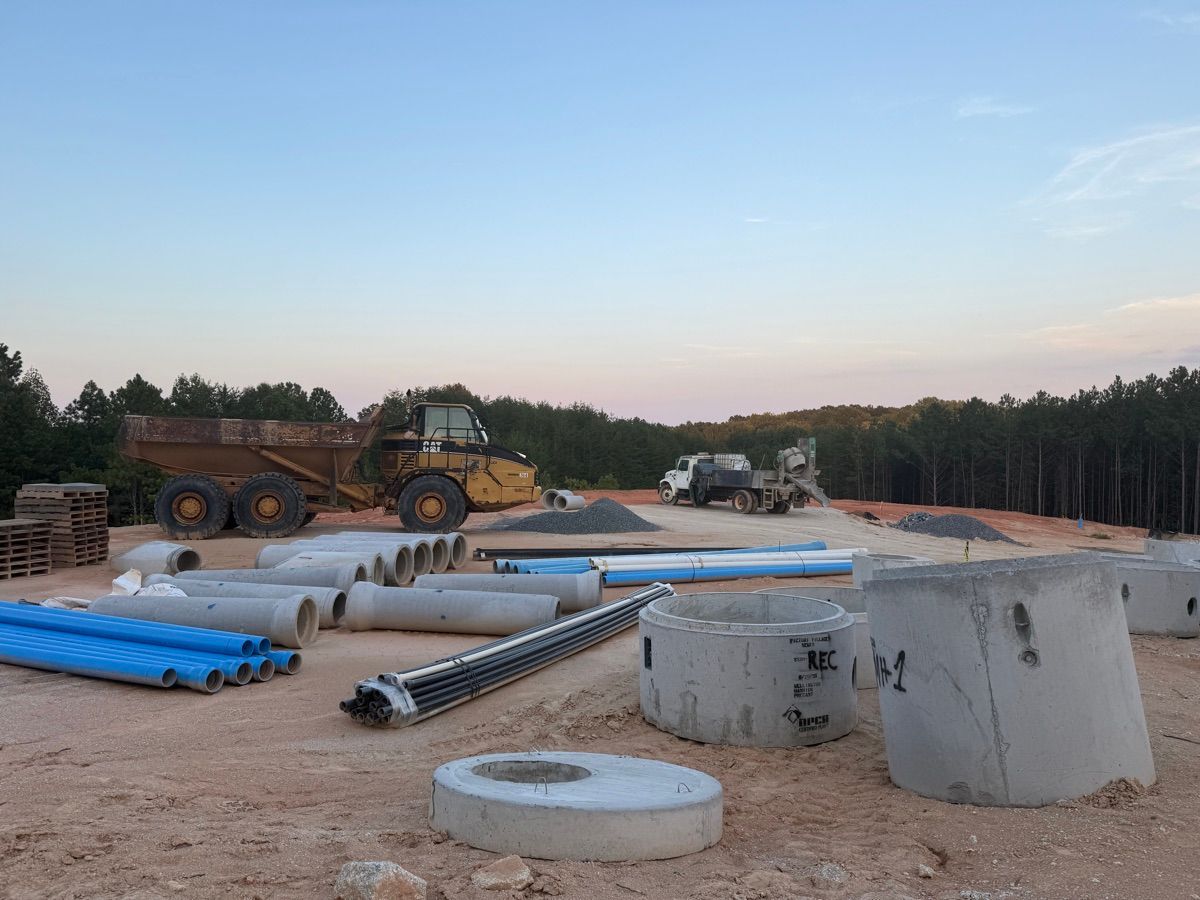
Prosecutors like Kinli Abee fight for justice in the courtroom. We are building the place where healing can happen afterward. Construction is underway now. See the progress in our Fall 2026 construction update.
5. How You Can Help
- Give: Every gift to our infrastructure fund helps finish the homes.
- Shop or donate items:
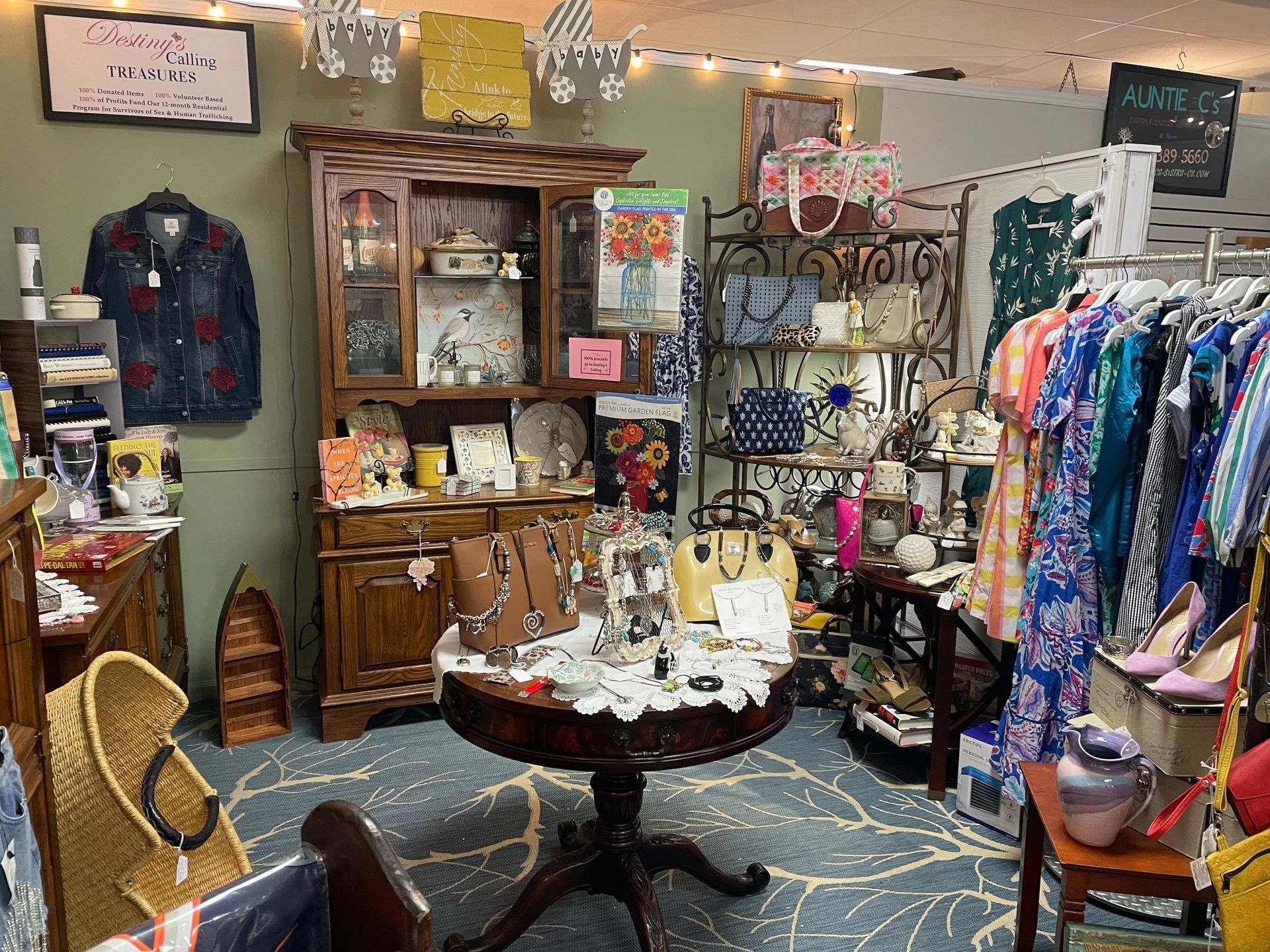
- Destiny's Calling ReSale Store, 702 Kings Mountain St, Clover, SC 29710. Open Wednesday to Saturday, 10am to 4pm. Donations accepted Wednesday to Saturday, 10am to 3pm
- The Shoppes at River's Edge, 951 Celriver Rd, Rock Hill, SC 29730. Open Monday to Friday, 10am to 6pm, and Saturday, 10am to 5pm.
- Catawba River Antique Mall, 406 E Catawba St, Belmont, NC 28012. Open Monday to Saturday, 10am to 6pm, and Sunday, 1pm to 6pm.
- Volunteer or pray: Find ways to serve on our Get Involved page.
- Speak up: Learn the signs and report what you see.
Frequently Asked Questions
When was South Carolina's first human trafficking conviction?
In October 2015. Assistant Attorney General Kinli Abee secured the first conviction under the state's 2012 human trafficking law in a Greenville County case. Two defendants each received 12 years in prison.
What is the penalty for human trafficking in South Carolina?
Under S.C. Code Section 16-3-2020, a first offense carries up to 15 years in prison, a second offense up to 30 years, and a third or later offense up to 45 years. Penalties are tougher when the victim is under 18.
Can a trafficked minor be charged with prostitution in South Carolina?
No. State law bars prosecuting a minor trafficking victim for prostitution, or for other nonviolent misdemeanors and Class F felonies committed as a direct result of being trafficked. Survivors can also ask a court to vacate and expunge convictions tied to their trafficking.
Does a victim have to testify for a trafficker to be convicted?
Not always. In 2024, a South Carolina jury convicted a trafficker without the victim's cooperation for the first time. Evidence such as phone records, ads, and witness accounts can carry a case.
How do I report suspected human trafficking in South Carolina?
If someone is in immediate danger, call 911. For confidential help or to report a tip, call the National Human Trafficking Hotline at 888-373-7888 or text 233733. You can also send tips to SLED at tips@sled.sc.gov.
What does Destiny's Calling do?
Destiny's Calling Ministries is building Victori Village, a secure, Christ-centered campus in York County, South Carolina, where girls ages 13 to 21 who have survived sex trafficking can live and heal for one to three years.
How can I support trafficking survivors in the Clover and Charlotte area?
You can donate to the infrastructure fund, shop or donate items at our ReSale Store in Clover or our locations in Rock Hill and Belmont, volunteer, join our prayer team, or invite us to speak to your church or group.
If You Need Help Now
Immediate danger:
call 911.
National Human Trafficking Hotline:
888-373-7888, or text 233733.